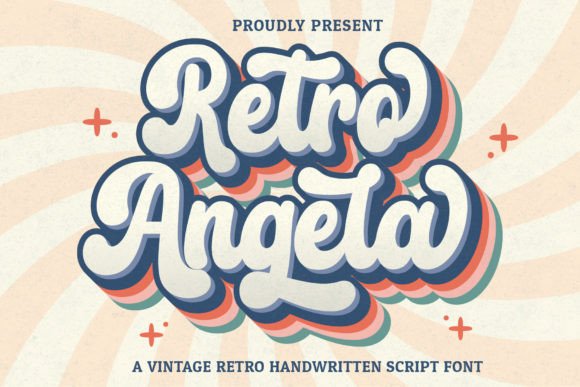
Retro Angela: The Vintage Handwritten Font That Feels Like a Secret
You know the feeling when you find something that just clicks? That’s what happened the first time I used Retro Angela on a project. It wasn’t just another script font in a folder. It had a voice. A personality. The kind of vintage handwritten charm that makes you lean in and pay attention. If you’re tired of generic typefaces that look like they came off an assembly line, let me introduce you to a font that feels like it was crafted just for you.
More Than Just Curves: The Visual Soul of Retro Angela
Retro Angela isn’t trying to be a perfect, polished modern script. Its beauty lies in its imperfections. The strokes have a natural, hand-lettered flow—think of the elegant cursive on a 1950s love letter or the confident loops on a vintage shop sign. There’s a warmth here, a human touch that digital precision often erases. The letterforms are balanced but not rigidly symmetrical, giving your text an organic, authentic rhythm. It carries a nostalgic, slightly romantic vibe without feeling dated or stuffy. This is a premium font that understands the difference between retro and antique.
As a display font, Retro Angela commands attention in headlines and logos. But it’s not a one-trick pony. The family often includes stylistic alternates and swashes—those decorative flourishes that can turn a simple “g” or “y” into a design feature. This versatility is key. You can keep it clean and readable for body text in a wedding invitation, or unleash its full decorative potential for a bold hero graphic. It’s a creative font that adapts to your project’s mood, not the other way around.
Where This Font Truly Shines: Practical Applications
Let’s get specific. Where does Retro Angela belong? Honestly, it’s more versatile than you might think.
- Logo & Brand Identity: Need a brand to feel approachable, artisanal, or heritage-inspired? Retro Angela in a logo or wordmark instantly sets that tone. It works beautifully for bakeries, boutique hotels, lifestyle blogs, or any brand that values story and craftsmanship.
- Wedding & Event Stationery: This is a natural home. For invitations, save-the-dates, menu cards, and place settings, the font adds an intimate, elegant, and personal touch that printed fonts can’t match.
- Packaging & Editorial Design: Imagine it on a coffee bag, a craft beer label, or the chapter headings in a cookbook. In packaging design and editorial design, it provides texture and visual interest that helps products and pages stand out on a crowded shelf or screen.
- Social Media & Digital Content: In the fast-scroll of Instagram or Pinterest, a distinctive handwritten font stops the thumb. Use it for quotes, sale announcements, or story highlights to create a consistent, recognizable aesthetic for your feed.
- Personal Projects & Crafts: For scrapbooking, custom t-shirts, mug designs, or printable wall art, Retro Angela gives your creations a professional, boutique-quality finish.
The key is matching the font’s personality to your project’s goal. It’s not for a sterile corporate report, but it’s perfect for anything aiming to connect on a human, emotional level.
The Designer’s Checklist: Using Retro Angela Effectively
Falling for a font is easy. Using it well takes a bit of thought. Here’s how to make sure Retro Angela works for you, not against you.
Pairing for Balance and Readability
A script font like this is a star player, but it needs a supporting cast. For maximum readability, pair it with a clean, simple sans serif font or a classic, sturdy serif font for body copy. Think of Retro Angela as your headline or accent font. Let a font like Lato, Open Sans, or even a gentle serif like Lora handle the longer paragraphs. This creates a clear visual hierarchy—your audience’s eyes know exactly where to go first.
Testing Before You Commit
Always test the font in your specific context. Type out your actual project text, not just “The quick brown fox.” Check how it looks at small sizes for subheadings and at large sizes for logos. Does it maintain its charm? Is it still legible? Zoom in on the details. This is where you’ll appreciate the quality of a well-crafted typeface.
Understanding What’s Included
A major practical benefit of Retro Angela is that it’s PUA encoded. For the non-designer, that means all the extra glyphs, swashes, and stylistic alternates are easily accessible through your character map or design software’s glyph panel. You don’t need fancy coding skills. Just select the letter, browse the alternates, and pick the one that fits. This turns a good design into a great one by adding those subtle, custom details.
Readability is Non-Negotiable
While it’s tempting to use every swash, exercise restraint. Prioritize clarity, especially for important information like event details, prices, or calls to action. A beautiful font that people can’t read fails its primary job. Use the decorative elements strategically as highlights, not for entire sentences.
Licensing for the Real World
Before you use any commercial font, check the license. Most reputable premium fonts like Retro Angela come with clear licensing for both personal and commercial use, but it’s your responsibility to verify. Can you use it in a logo for a client? On products for sale? On a website? The license agreement will tell you. This is a critical step in professional and web design work that protects you and your client.
In the end, a font is a tool. Retro Angela is a particularly expressive one. It won’t solve every design problem, but for the right project, it’s the missing piece that transforms good work into something memorable. It brings a touch of handcrafted history to our digital world, and in doing so, helps your designs tell a more compelling story.